When it comes to choosing web hosting for your website, two options often come up: cloud hosting and shared hosting. Each has its unique advantages, limitations, and ideal use cases. Understanding the differences can save you headaches, optimize your website’s performance, and even save costs. In this article, we break down cloud hosting vs shared hosting to help you make an informed decision.
What is Shared Hosting?
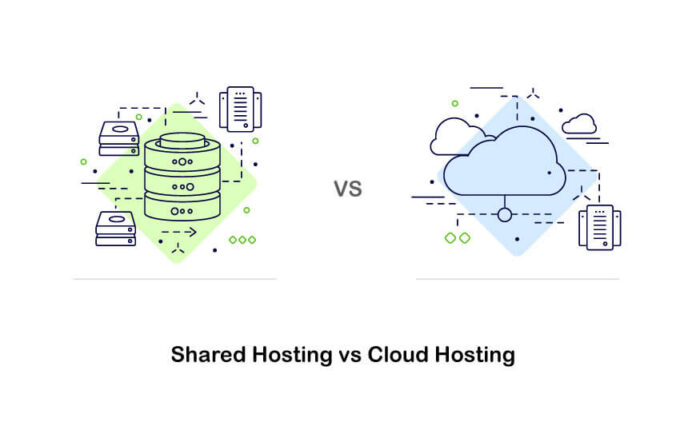
Shared hosting is the most common and cost-effective type of web hosting. In shared hosting, multiple websites share the same server and its resources, such as CPU, RAM, and disk space.
Pros of Shared Hosting
- Affordable: Shared hosting is ideal for small businesses, personal blogs, and startups due to its low cost.
- Easy to Use: Hosting providers usually offer user-friendly control panels like cPanel for managing your website.
- Maintenance-Free: The hosting provider handles server management, security patches, and software updates.
Cons of Shared Hosting
- Limited Resources: Since resources are shared, high traffic on another website may affect your site’s performance.
- Security Risks: Shared servers increase vulnerability, as one compromised site can impact others.
- Limited Scalability: Upgrading resources is not as flexible compared to cloud hosting.
Ideal for: Personal blogs, small business websites, and websites with low to moderate traffic.
What is Cloud Hosting?
Cloud hosting uses a network of virtual servers hosted on the cloud. Instead of relying on a single physical server, your website leverages multiple servers working together.
Pros of Cloud Hosting
- High Scalability: Easily scale resources up or down based on traffic demands.
- Better Performance: Websites are faster and more reliable because they’re not limited to a single server.
- Enhanced Security: Cloud servers provide isolation and backup features to protect your data.
- Pay-as-You-Go: Many cloud hosting providers charge only for the resources you use.
Cons of Cloud Hosting
- Higher Cost: More expensive than shared hosting, especially for small websites.
- Complexity: May require technical knowledge to manage server configurations, unless using managed cloud hosting.
Ideal for: E-commerce websites, high-traffic blogs, enterprise-level applications, and resource-intensive websites.
Cloud Hosting vs Shared Hosting: Key Differences
| Feature | Shared Hosting | Cloud Hosting |
|---|---|---|
| Cost | Low | Moderate to High |
| Performance | Dependent on other sites | High & consistent |
| Scalability | Limited | Highly scalable |
| Reliability | Downtime possible if server fails | Minimal downtime due to multiple servers |
| Security | Moderate | High |
| Ideal For | Small websites, blogs | Business websites, e-commerce, high traffic |
When to Choose Shared Hosting
- You’re launching a personal blog or portfolio.
- Your website has low traffic and limited resource needs.
- Budget is your primary concern.
When to Choose Cloud Hosting
- Your website is growing and may experience high traffic spikes.
- You need higher uptime and better website performance.
- Security and data redundancy are priorities.
Top Hosting Providers to Consider
- Shared Hosting: Bluehost, HostGator, SiteGround
- Cloud Hosting: Amazon Web Services (AWS), Google Cloud, DigitalOcean
Conclusion
Choosing the right hosting depends on your website’s needs. Shared hosting is ideal for beginners and small sites, while cloud hosting provides performance, scalability, and security for growing businesses. By understanding these differences, you can make a decision that optimizes cost, speed, and reliability for your website.
Investing in the right hosting solution now can save you from costly migrations and downtime later.

